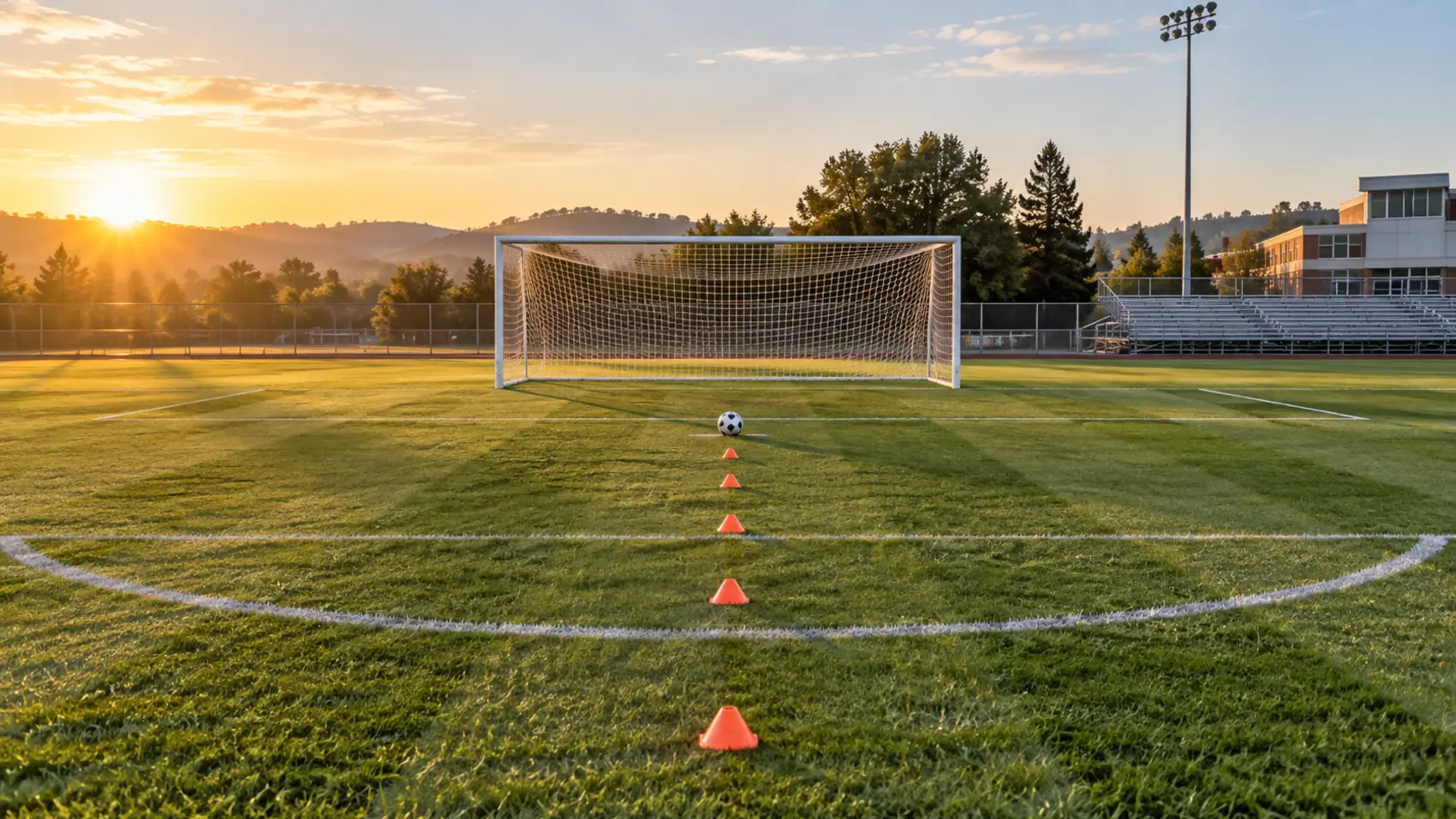
Personalized emails to college soccer coaches, ready to send.
About 5.9% of high school boys and 7.9% of high school girls who play soccer go on to compete in the NCAA, so the programs that fit your athlete run across every division. ScoutBridge writes the email to each coach with the video and schedules they ask for, and your soccer player sends it from their own Gmail. Replies come back to your portal.
How many high school soccer players go on to the NCAA?
The sanctioned participation data for soccer, by division, from the NCAA’s 2024-25 table.
Percentages were calculated by dividing the number of NCAA participants by the number of high school participants. Source: NCAA, Estimated probability of competing in college athletics (2024-25 data)
Men
5.9%
of high school boys who play soccer reach an NCAA roster
- D1
- 1.4%
- D2
- 1.7%
- D3
- 2.8%
28,746 men play soccer in the NCAA, of 484,908 in high school
Women
7.9%
of high school girls who play soccer reach an NCAA roster
- D1
- 2.8%
- D2
- 2.2%
- D3
- 3.0%
31,200 women play soccer in the NCAA, of 393,048 in high school
Division I roster limits in soccer
From July 1, 2025, Division I schools that opted into the House settlement replaced sport-by-sport scholarship limits with roster limits, and a coach may put any athlete on the roster on scholarship. The previous scholarship limit is shown for context, because it still shapes how many funded spots a program tends to carry.
| Group | Previous scholarship limit | Roster limit |
|---|---|---|
| Men | 9.9 | 28 |
| Women | 14 | 28 |
Scroll for more
Sources: NCAA, Division I Board of Directors adopts changes to roster limits (June 2025); Business of College Sports, New roster limits set by House v. NCAA.
When can Division I coaches contact a soccer recruit?
June 15after sophomore year
is the earliest a Division I soccer coach may initiate contact for recruiting materials, calls, and electronic messages. Rules change; confirm the current NCAA calendar.
- Freshman and sophomore year
Build full-match video with your jersey number marked, note your position and foot, and keep your transcript current.
- Summer after sophomore year
Division I coaches may begin sending materials, calling, and messaging on June 15 after sophomore year, so your video and academics should be ready before that date.
- Junior and senior year
Target ID camps at programs that fit, widen outreach across every level, and follow up after each event.
What soccer coaches ask for
Coaches decide from a short list, and it stays much the same at every level. Each draft includes those items and stays current as new film and schedules come in, so a coach always has what they need to take the next step.
- Asked first
Full-match video and a highlight reel that shows you in the run of play, not only goals.
Your position, dominant foot, and club or academy level.
Your club and ID camp schedule, so a coach can watch you live.
A transcript and graduation year.
A reference from your club coach.
How soccer outreach works
Start with what coaches ask
Every draft starts with what soccer coaches ask for first: full-match video and a highlight reel that shows you in the run of play, not only goals.
Match every level
ScoutBridge matches your soccer athlete to programs from Division I to junior college that fit their profile and goals. Coach data for soccer is being added.
Send with one tap
Each email carries the film and academics that program's coaches ask for. Your athlete sends it from their own Gmail, or taps Approve all.
Follow up, in full view
Follow-ups are drafted when a coach goes quiet. Replies show up in your portal and your family is notified.
Soccer recruiting questions
Do college soccer coaches want highlights or full-match video?
Both. A highlight reel earns the first look, but coaches rely on full-match video to see how you move without the ball, how you defend, and how you decide under pressure. ScoutBridge includes both, with your jersey number marked.
When can a Division I soccer coach first contact my athlete?
For Division I soccer, a coach may first send recruiting materials, make calls, and send electronic messages on June 15 after sophomore year. Rules change, so confirm the current NCAA calendar.
Are ID camps worth it for recruiting?
ID camps let a coaching staff see you in person and coach you, which can move a recruitment forward, but they work best when the coaches already know your film. Your emails are timed so a coach knows to look for you at a camp.
Do you reach both men's and women's soccer programs?
Yes. Matches include women's and men's programs at every level, so your athlete is not limited to a single division.
More sports we cover
Basketball
Game film against real defense, live schedules, and outreach to every level.Basketball recruiting
Baseball
Velocity numbers, position film, and summer showcase schedules sent to coaches.Baseball recruiting
Softball
Position film, pitching speeds, and travel schedules sent to college coaches.Softball recruiting
Volleyball
Position film, height and touch, and club schedules sent to college coaches.Volleyball recruiting
Football
Full-game film, verified testing numbers, and season schedules sent to coaches.Football recruiting
Track and field
Verified marks by event, race video, and meet schedules sent to college coaches.Track and field recruiting
Lacrosse
Full-game film, position detail, and recruiting-event schedules sent to coaches.Lacrosse recruiting
Golf
Tournament scores, scoring average, and swing video sent to college coaches.Golf recruiting
Tennis
Rankings and results, match video, and tournament schedules sent to coaches.Tennis recruiting
Put your soccer athlete in front of the right coaches
ScoutBridge writes the emails with the film and schedules soccer coaches ask for. Your athlete sends them with one tap.